
WHAT HAPPENED TO THE SRO’S?
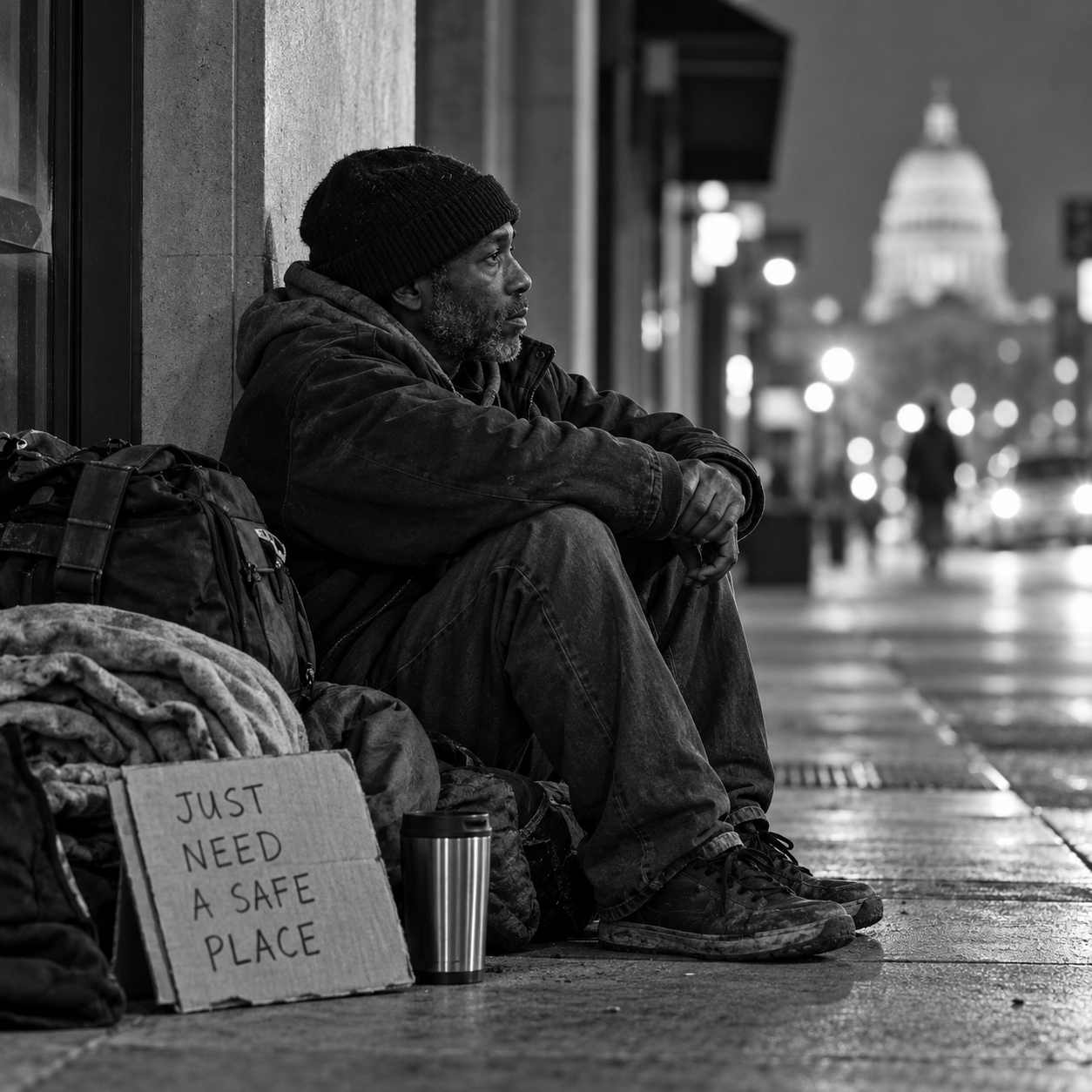
The other night, Jonny and I attended a community forum at the Goodman Community Center, where people came together in the aftermath of the Corey Ruiz shooting to talk about what happened, how our community is feeling, and some of the larger issues surrounding it.
The room was divided into small discussion circles focused on issues connected to our community—public safety, racial disparities, crisis response, housing and unhoused, and more.
Jonny and I sat in the housing and homelessness circle.
And we listened.
We heard from people who have experienced homelessness and from people who work with this population every day. Some of the stories were hard to hear.
I have never been homeless. I don't have the wisdom that comes from knowing what it feels like to wonder where you're going to sleep or how you're supposed to solve everything else in your life without first having a safe place to live.
Listening to people who do know that experience brought even more urgency to an issue we already considered one of the biggest we need to tackle in Madison and Dane County.
And it led me to ask a simple question:
What happened to the SROs?
SRO stands for Single Room Occupancy—a small, inexpensive private room, often with shared kitchens or bathrooms. Historically, SROs provided one of the lowest-cost forms of permanent housing for people who could live independently but couldn't afford a conventional apartment.
What I heard in our circle was that Madison used to have far more of them.
So we went home and looked.
Madison has known about this problem for a long time.
In 2013, the City identified an inadequate supply of SRO housing and recognized that losing these units increased the risk of the unhoused for residents with few other housing options.
Permanent supportive housing became one response to the shortage. That housing is important, particularly for people experiencing chronic homelessness or who need ongoing services.
But permanent supportive housing and traditional SRO housing aren't the same thing.
Which raises a question:
Did we replace all of the housing we lost—or did we lose a type of housing that still serves a need today?
The numbers make that question worth asking.
In 2015, the Madison/Dane County Point-in-Time count identified 452 single adults experiencing homelessness. In 2025, it counted 595—an increase of nearly 32%.
During that same period, the number of people experiencing homelessness in families fell from 356 to 191.
Madison's own 2025 Housing Snapshot points to part of the problem. The City says affordable-housing efforts have been more successful for low-income families than for low-income singles and specifically identifies rising housing costs and the elimination of most SRO housing units as factors increasing housing instability for this population.
That caught my attention.
Because for some people, the missing piece may be much simpler:
A room they can afford.
A private place to sleep. A place for their belongings. An address. A little privacy. A foothold from which to rebuild.
SROs haven't completely disappeared. The YWCA in downtown Madison still operates SRO units, and Dane County recently awarded funding to a small Jennifer Street project that includes seven permanently affordable SRO units.
So maybe the question isn't whether SROs are an idea from the past.
Maybe the question is whether they should be part of Madison's future.
Not as a replacement for supportive housing, shelters, mental-health services or other parts of our homelessness system.
As another path.
ASK THE PEOPLE LIVING IT.
That may have been my biggest takeaway from the forum.
Before deciding what people need, sit down with them.
Listen.
Ask what happened before they became homeless. Ask what keeps them homeless. Ask where they get stuck when they try to get out.
And then look at the system we've built and ask whether it provides a path that matches the problem.
The conversation in that circle didn't give me all the answers.
It gave me something just as important:
A better question.
What happened to the SROs?
And should bringing some of them back be part of the answer?
